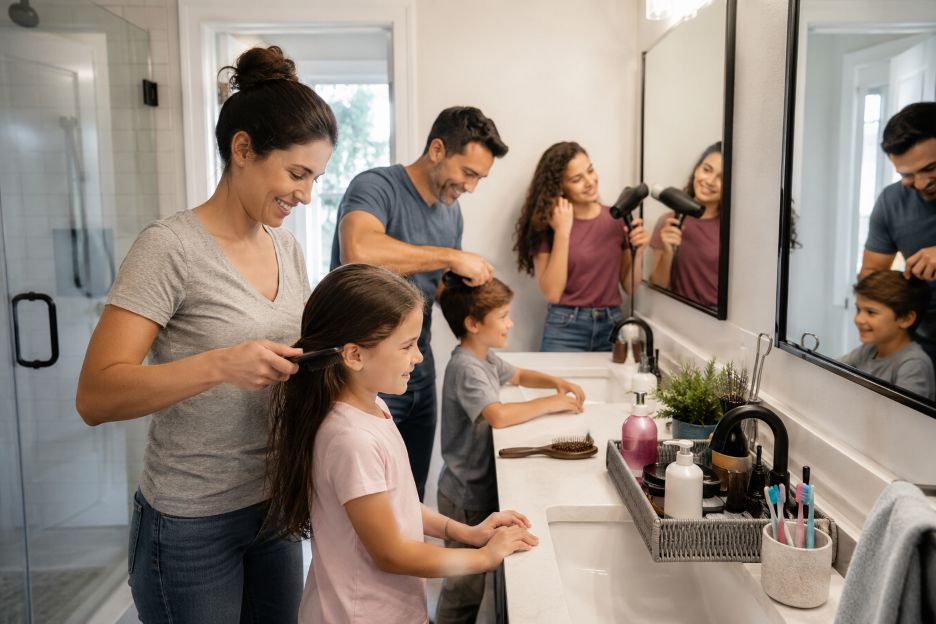
Healthy hair depends on consistent care, appropriate hygiene, and protection from everyday damage. Research published by the American Academy of Dermatology Association explains that simple habits such as gentle washing, using suitable products, and avoiding unnecessary heat can help maintain healthy hair across different stages of life.
Busy family schedules often make personal care routines difficult to maintain. Parents may find themselves balancing school, work, activities, and household responsibilities while trying to care for everyone’s hair needs. Families with color-treated hair may occasionally seek advice from a hair color specialist to better understand how home maintenance can support lasting color and healthy strands between appointments.
Why Family Hair Care Routines Become Inconsistent
Modern households often operate on packed schedules. Early mornings, extracurricular activities, and changing work hours leave little time for detailed grooming routines. As a result, brushing may become rushed, conditioner may be skipped, or styling tools may be overused for convenience.
Experts at the American Academy of Pediatrics note that establishing predictable daily routines benefits children in many areas of health. Hair care is no exception. Consistent habits help reduce tangles, scalp irritation, and preventable hair damage while making grooming less stressful for both parents and children.
The good news is that effective routines do not need to be complicated. Small daily habits often produce better long-term results than occasional intensive treatments.
Step 1: Create Age-Appropriate Hair Care Routines
Children
Young children generally require simple, gentle care. Their scalp produces less oil than adults, and frequent washing may not always be necessary.
- Use mild shampoos designed for children.
- Brush gently to reduce breakage.
- Choose hairstyles that avoid excessive pulling.
- Check regularly for scalp irritation or signs of lice during school seasons.
The American Academy of Dermatology Association recommends avoiding hairstyles that place continuous tension on the scalp because repeated pulling may contribute to traction alopecia.
Teenagers
Hormonal changes during adolescence often increase oil production, making hair appear greasy more quickly. Teens may also experiment with heat styling, coloring, or chemical treatments.
- Select shampoos based on scalp condition rather than trends.
- Use heat protectant products before blow drying or straightening.
- Encourage regular conditioning to restore moisture.
- Teach safe brushing habits when hair is wet.
Studies published by the International Journal of Trichology indicate that excessive heat exposure and repeated chemical processing can weaken the hair shaft over time.
Adults
Adult hair needs vary depending on age, lifestyle, health conditions, and cosmetic treatments. Some people require additional moisture, while others benefit from lightweight products that control oil.
- Wash hair according to scalp needs rather than following a fixed schedule.
- Trim regularly to minimize split ends.
- Limit excessive heat styling when possible.
- Protect hair from prolonged sun exposure during outdoor activities.
Research from the National Institutes of Health shows that nutrition, overall health, stress levels, and certain medical conditions all influence hair quality and growth.
Step 2: Build a Routine That Fits Busy Schedules
Parents often succeed when routines become predictable rather than time consuming. Assigning specific hair care tasks to certain days helps reduce decision fatigue.
- Monday: Wash and condition.
- Wednesday: Quick scalp check and detangle.
- Friday: Deep conditioning if needed.
- Weekend: Trim bangs if appropriate or prepare styling tools for the coming week.
Keeping brushes, detangling sprays, and hair ties in one accessible location also saves valuable time during busy mornings.
Step 3: Know When Home Care Is Enough
Many common concerns respond well to consistent home care. Mild dryness, occasional tangles, and seasonal frizz can often improve with gentle products and healthier styling habits.
Families can usually manage routine maintenance by:
- Using appropriate shampoo and conditioner.
- Avoiding excessive brushing.
- Reducing unnecessary heat exposure.
- Maintaining regular trimming schedules.
- Encouraging balanced nutrition and hydration.
Reports from the World Health Organization emphasize that overall nutrition supports healthy skin and hair as part of general well-being. Parents who want to build sustainable wellness routines for the entire family may also find additional ideas in this guide to healthy habits for busy parents, which explores practical approaches to maintaining overall health alongside everyday responsibilities.
Step 4: Recognize When Professional Advice May Help
Some situations benefit from professional assessment rather than continued home experimentation. Persistent scalp irritation, unusual hair loss, severe dandruff, or damage following repeated coloring may require evaluation by qualified professionals.
People who regularly color their hair often benefit from personalized maintenance recommendations, including advice about moisture balance, product selection, and scheduling future treatments. Professional guidance can help preserve cosmetic results while reducing unnecessary damage from overlapping chemical services.
Medical concerns such as sudden hair shedding, patchy hair loss, painful scalp inflammation, or persistent itching should be evaluated by a healthcare provider. The American Academy of Dermatology Association advises early assessment because some hair disorders respond more effectively when treated promptly.
Step 5: Make Healthy Hair a Family Habit
Children often imitate adult behavior. When parents demonstrate gentle brushing, consistent washing habits, and responsible use of styling tools, younger family members are more likely to develop similar routines.
Simple habits can become shared family activities:
- Brush hair before bedtime.
- Replace worn brushes regularly.
- Use microfiber towels to reduce friction.
- Allow hair to air dry whenever practical.
- Drink enough water throughout the day.
Findings from the Centers for Disease Control and Prevention continue to show that healthy daily routines support overall wellness, making it easier for families to maintain consistent personal care habits over time.
Conclusion
Healthy family hair care does not require complicated routines or expensive products. Consistency, age-appropriate care, and realistic habits often produce the best long-term results. Parents who understand the changing needs of children, teenagers, and adults can create routines that fit naturally into busy schedules while protecting hair from avoidable damage.
As family lifestyles continue to evolve, balancing convenience with proper care will remain important. Simple home maintenance, combined with professional guidance when needed for cosmetic treatments or persistent concerns, gives families a practical approach to maintaining healthy hair throughout every stage of life.
Continue reading
 Parenting often becomes a full-time responsibility that leaves little room for personal care. Many parents focus so much on their children that they forget to care for themselves. Over time, stress, lack of sleep, and busy schedules can affect both physical appearance and emotional wellness. This is one reason why more parents are turning to an Aesthetic Institute for support, education, and confidence-building treatments.
 Although medical experts have reservations about the beneficial outcomes of AAS in the treatment of genetic disorders, they believe that its use for both medical and nonmedica purposes call for more studies. Apparently, the uses of AAS as treatment are clinically promising but the efficacy of the drugs in long term use still needs further assesment.
 Parents of